When does high season start in Phuket?
Phuket’s busy season follows the monsoons. The Thai Meteorological Department describes the southwest monsoon as running from about mid-May to mid-October, bringing the rainy season to the Andaman coast, and the northeast monsoon from about mid-October to mid-February, when the west coast turns drier. Bookings for villas build through November and are strongest from Christmas to the end of the dry season, with a second peak around Chinese New Year, which falls on 6 February in 2027.
That timing is the whole reason for a checklist. A villa that has been shut, or let only occasionally, through five or six months of rain and humidity reopens straight into its most valuable weeks. Anything that was quietly deteriorating since May is discovered by the first guest of December, at the moment a bad review costs the most. For the figures behind the season, see our Phuket rental market report, which sources every number it uses.
What needs doing six weeks before the first guest?
Six weeks out is the time for anything that needs a contractor, a part ordered from Bangkok, or a second visit. In our experience these are the jobs that slip if they are left to the last fortnight:
- Air conditioning. A full service of every unit, not a filter rinse: coils cleaned, condensate drains flushed, refrigerant checked. Our guide to villa air conditioning maintenance in Phuket explains why a washed filter is not a cleaned machine.
- Roof, gutters and drains. Leaves and silt from the rainy season block gutters and surface drains. A blocked drain in December is not an emergency; the same drain in the first storm of next May is.
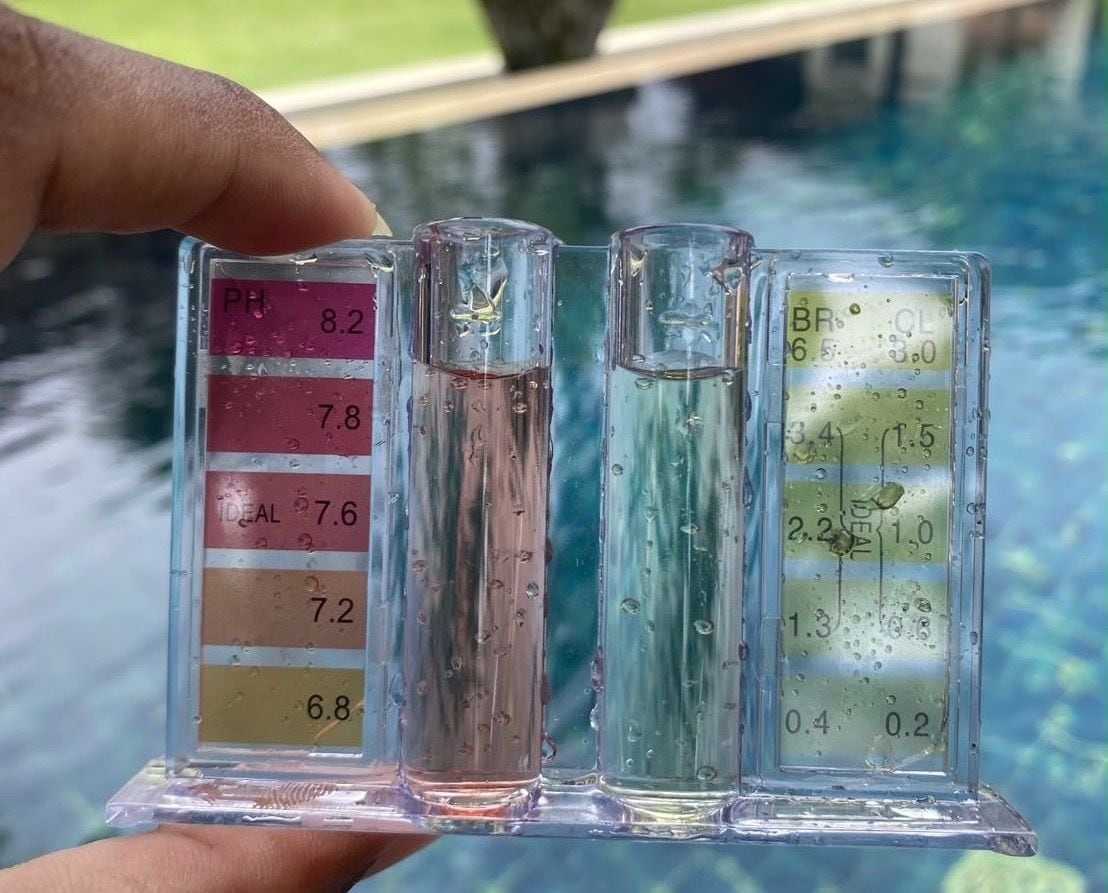
- Pool equipment. Pumps, filters and chlorinators that ran through months of debris need checking before the water itself is treated.
- Pest and termite inspection. Damp months bring ants, termites and mosquitoes. Book the inspection early, because treatment may need the house empty for a day.
- Calendar and prices. Check that your listing calendar is open, minimum stays are set for the peak weeks, and nothing from last season’s settings still blocks dates.
Which checks matter most, and when should each be done?
The table below is the order we follow for a typical pool villa. The timings count backwards from the first guest of the season. They are our recommendation, not a legal requirement, and a condo or a villa without a pool will skip several lines.
| Item | When | What to check | Who usually does it |
|---|---|---|---|
| Air conditioning | 6 weeks | Coils, condensate drains, refrigerant, remote controls | Air conditioning technician |
| Roof, gutters, drains | 6 weeks | Leaves, silt, loose tiles, stains on ceilings | Maintenance contractor |
| Pool equipment | 5 weeks | Pump, filter, chlorinator, lights, leaks | Pool company |
| Water tank and pump | 4 weeks | Sediment, pressure, pump noise, leaks, filters | Plumber or caretaker |
| Damp and mould | 4 weeks | Behind wardrobes, mattresses, curtains, leather | Housekeeping |
| Electrics and water heaters | 3 weeks | Residual current breaker test, sockets outdoors, heater function | Electrician |
| Pest control | 3 weeks | Ants, termites, mosquito breeding spots | Pest control company |
| Pool water | 2 weeks | Balance, clarity, safety cover or alarm | Pool company |
| Locks, safe, key system | 2 weeks | Batteries, codes, spare keys, sliding door tracks | Caretaker or manager |
| Safety equipment | 2 weeks | Fire extinguisher date, first aid kit, torches | Caretaker or manager |
| Linen and inventory | 2 weeks | Stained or damp linen, towels, kitchen items | Housekeeping |
| Wi-Fi and TV | 1 week | Speed in every bedroom, router password, streaming log-ins | Caretaker or manager |
| Paperwork and house manual | 1 week | TM30 account, emergency numbers, house rules | Owner or manager |
What usually fails when a villa reopens after the rains?
The faults are remarkably consistent from one house to the next, because they all come from the same two causes: humidity and lack of use.
Water that sat still
Condensate drains on air conditioners clog with slime and start dripping inside, usually onto a wall or a ceiling. Pool water that was not visited often enough turns green within days, and the pump that sat idle may hum without turning. Hot water heaters that were switched off for months can fail when they come back on. The pool maintenance guide for the rainy season and our page on the villa water tank and pump cover each of these in detail.
Air that never moved
Mould grows where air does not circulate: behind wardrobes, under mattresses, inside cupboards and on leather. It is easiest to stop before it is visible, which is why the damp check sits four weeks out rather than one. Our guide to mould and humidity in an empty villa explains what can be cleaned and what has to be replaced.
Salt that kept working
Close to the sea, salt air keeps attacking metal whether or not anyone is in the house. Hinges, sliding door tracks, outdoor light fittings and the casing of outdoor air conditioning units show it first. If your villa is on the coast, add a rinse and inspection of exposed metal to the six-week list; our page on salt corrosion in coastal villas lists the parts that fail first.
What paperwork should be ready before the first arrival?
Three things are worth checking before the season, because they are awkward to fix once guests are in the house.
- TM30 reporting. Under section 38 of the Immigration Act, the owner or person in charge of a property must notify immigration within 24 hours when a foreign national comes to stay. Log in to your online account before the season and confirm it still works. Our TM30 guide for Phuket owners covers registration and filing step by step.
- Length of stay. High season is when owners are most tempted to accept short stays. Before you open the calendar to stays of a few nights, read what the Hotel Act means for a private villa in our guide to short-term rental rules in Phuket. For a condo, the condo 30-day rule applies as well as your building’s own regulations.
- House manual and emergency contacts. Wi-Fi details, how the pool alarm works, which switch runs the water pump, who to call at night, and the nearest hospital. A printed copy in the villa and a digital copy sent before arrival answer most of the messages a manager would otherwise receive at midnight.
The season is also when rental income arrives, and with it the tax question. Our guide to rental income tax in Thailand for foreign owners explains what is declared and how.
Can you run the checklist yourself from abroad?
You can, as long as someone reliable is in the house and you can see what they did. Owners who are abroad usually work in one of three ways:
- A caretaker or housekeeper already employed at the villa does the visual checks, and specialist companies do the air conditioning, the pool and the electrics. This works well when the caretaker can read a pool test and knows which noises are normal. Our guide to employing villa staff in Phuket covers what that relationship commits you to.
- A trip to Phuket in November, with contractors booked in advance for the days you are there. It is the most reassuring option, and the most expensive in flights and time.
- A property manager runs the whole list and reports on it. That is what our villa maintenance and housekeeping service does between seasons, and what villa rental management in Phuket includes for villas we let.
Whichever you choose, ask for evidence line by line: a dated photo of the cleaned air conditioning coil, a video of the pool pump running, a screenshot of the Wi-Fi speed test in the furthest bedroom. A message saying “everything checked” tells you nothing about which things were checked. We work from Choeng Thale, so villas in Cherng Talay and Pasak, Bang Tao and Layan are close to our office; the rest of the island is covered too, as our page on the areas we cover in Phuket explains.
What all of this costs depends on the house, which is why we do not publish a single figure. The true cost of running a villa in Phuket breaks down what moves each line, and our property management fees in Phuket page shows what our own fee covers.
What do owners ask about preparing for high season?
When is high season in Phuket?
For villa rentals, demand builds through November and is strongest from Christmas to the end of the dry season, with a peak around Chinese New Year. The Thai Meteorological Department places the northeast monsoon, which brings drier weather to Phuket’s west coast, from about mid-October to mid-February.
How early should I book an air conditioning service before the season?
Book it about six weeks before the first guest. That leaves time for a second visit if the technician finds a refrigerant leak or a failing part, and it avoids the weeks just before the season when air conditioning companies are fully booked.
What is the most common problem when a villa reopens?
Damp. It shows up as mould behind furniture, musty linen, air conditioning drains that drip indoors and pool water that has turned green. All of it is easier to fix four weeks before guests arrive than on the morning of check-in.
Do I need to report every foreign guest in high season?
Yes. TM30 requires the owner or person in charge of the property to notify immigration within 24 hours of a foreign guest’s arrival, whatever the length of stay. Check that your online account works before the season starts, so the first busy weekend does not become a filing problem.
How much does it cost to prepare a villa for high season?
It depends on the size of the villa, the number of air conditioning units, the pool and what the rainy season left behind, so a single figure would mislead. Ask each contractor for a written quote per item, and keep last year’s invoices to compare.
Can a property manager prepare the villa while I am abroad?
Yes. A manager can book and supervise the contractors, run the checks and send you dated photos and videos for each item. Ask in advance exactly what evidence you will receive, and for which items, so you can see the work rather than take it on trust.
Where can you check the official information?
- Monsoon seasons and weather warnings: Thai Meteorological Department.
- TM30 notification of residence and online filing: Immigration Bureau.
- Dengue prevention and standing water around the house: Department of Disease Control, Ministry of Public Health.