Insights
The Property Management System: Your Business’s Central Command Center
Let’s be honest. If you’re managing more than one rental property, your desktop is probably a chaotic collage of spreadsheets. There’s one for bookings, another for expenses, and a third, color-coded monstrosity for tracking cleaning schedules. Your email inbox is a relentless flood of inquiries, and you live with the low-grade, persistent fear of the dreaded double booking.
You’re not just managing properties; you’re juggling flaming torches while riding a unicycle. It’s exhausting.
What if you could have a central command center? A single digital dashboard where every moving part of your business is visible, automated, and under control? That isn’t a pipe dream. It’s a property management system (PMS), and it’s less about software and more about reclaiming your sanity and your time.
This article is your complete guide. We’ll break down what a PMS actually is, explore its essential features, uncover the tangible benefits you’ll see, and walk you through how to choose the right one for your portfolio.
Stop Drowning in Spreadsheets: An Introduction to the PMS

Beyond a Glorified Spreadsheet: The Core Concept
So, what exactly is a property management system? At its core, a PMS is a centralized software solution designed to automate and streamline the day-to-day operations of managing rental properties. Think of it less as a single tool and more as a digital ecosystem for your entire business.
Here’s a better analogy: A PMS is to a property manager what an operating system is to a computer. It runs everything quietly in the background, the calendars, the payments, the messages, so you can focus on the important applications, like growing your business and delighting your guests.
It handles everything from the moment a guest clicks “Book Now” to the moment you send them a request for a 5-star review, and all the messy, complicated steps in between.
The PC revolution of the 80s and 90s brought smaller, server-based systems, but they were still complex and expensive. The real game-changer was the rise of cloud computing in the late 2000s. Suddenly, powerful, sophisticated software became accessible and affordable through SaaS (Software as a Service) models. This was the moment the technology was democratized, opening the door for everyone.
- Short-term rental hosts with just a handful of properties on Airbnb and Vrbo.
- Boutique hotel owners managing a 20-room property on an island like Phuket.
- Long-term residential landlords juggling apartment complexes and single-family homes.
- Commercial property managers overseeing office spaces and retail units.
If you collect rent and manage tenants or guests, a PMS is built for you.
Read next: Your Property's Central Nervous System: A Complete…
A Brief History: From Hotel Ledgers to the Cloud
This technology didn’t just appear overnight. The earliest versions of property management systems emerged in the 1970s, primarily for large hotel chains. They were clunky, room-sized mainframe computers running on-premise software that cost a fortune.
Who Uses a PMS? (Hint: It’s Not Just for Big Chains)
The modern PMS isn’t just for the Hiltons and Marriotts of the world. The user base is incredibly diverse. You’ll find them being used by:
The Non-Negotiable Features: Anatomy of a Modern PMS
Not all systems are created equal, but any modern, effective PMS worth its salt will be built around a core set of powerful features. These are the non-negotiables.
The Booking Engine & Centralized Calendar
This is the heart of the system. A centralized calendar gives you a single, unified view of all your bookings across all your properties and all your channels. No more frantically cross-referencing three different calendars to see if you have availability.
Even better, most top-tier systems include a direct booking engine. This allows you to take commission-free bookings directly from your own website, giving you more control over your revenue and guest relationships.
The Channel Manager: Your Double-Booking Exterminator
If you list your properties on multiple online travel agencies (OTAs) like Airbnb, Vrbo, and Booking.com, a channel manager is absolutly critical. This feature is your ultimate defense against double bookings.
📖 Lire aussi : The Success Property Management Playbook: 7 Pillars of…
It works by automatically syncing your availability and rates across all connected channels in real-time. When a guest books your property on Airbnb for July 10-15, the channel manager instantly blocks those dates on Vrbo and your direct booking site. It’s the silent, tireless employee you’ve always dreamed of.
Integrated Accounting & Financial Reporting
A great PMS goes far beyond simply collecting rent. It’s a robust financial tool. Look for features like:
- Automated Invoicing: Send professional, automated invoices for rent, fees, and deposits.
- Expense Tracking: Log every maintenance cost, utility bill, and management fee to get a clear picture of your profitability.
- Owner Statements: For third-party managers, the ability to generate clean, professional owner statements with a single click is a lifesaver.
- Trust Accounting Compliance: Many systems are built to handle the complex rules of trust accounting, keeping you compliant and organized.
Automated Guest Communication & CRM
How much time do you spend answering the same questions over and over? “What’s the Wi-Fi password?” “Where do I park?” “What are the check-in instructions?”
A PMS with a strong communication module lets you automate this entire process. You can create message templates that are triggered to send automatically based on events like a new booking, 3 days before check-in, or 1 day after checkout. It also provides a unified inbox, bringing all your conversations from Airbnb, email, and SMS into one manageable place.
Operations & Maintenance Coordination
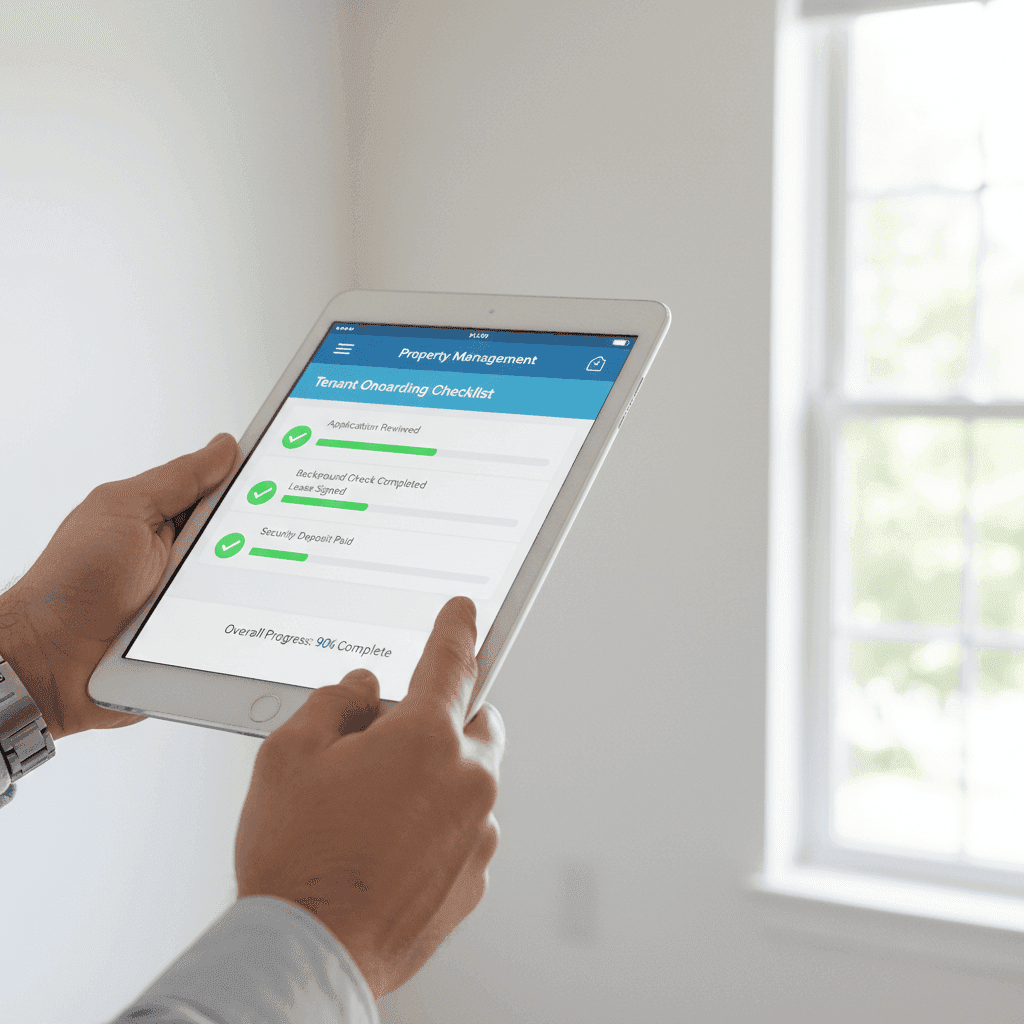
The guest experience doesn’t happen in a spreadsheet. It happens on the ground. A PMS with operations management allows you to create and assign tasks for your team. You can automatically schedule a cleaning after every checkout, create a maintenance ticket for a leaky faucet, and track the progress of every work order, ensuring nothing ever falls through the cracks.
📖 Dans le même thème : Property Management Unlocked: Your A to Z Guide on…
The Real-World Payoff: Why You’ll Kick Yourself for Waiting
Features are nice, but what do they actually do for your business? The benefits are tangible, immediate, and profound.

📖 Vous aimerez aussi : Beyond Rent Collection: A Practical Guide to Property…
- Occupancy rates by property and by month.
- Revenue per available room (RevPAR).
- Average length of stay.
- Booking sources and lead times.
This intelligence allows you to make smarter, data-backed decisions to grow your business strategically.
Benefit 1: Obliterating Time-Consuming Admin Tasks
This is the most immediate payoff. The automation of communication, invoicing, and scheduling frees up an astonishing amount of your time. Industry reports suggest that a robust PMS can automate over 80% of routine guest messaging. For a manager with 10 properties, that can easily translate to saving 10-15 hours of administrative work every single week. What would you do with that extra time?
Benefit 2: Maximizing Your Revenue and Occupancy
A PMS is a revenue-generating machine. The channel manager gets your property in front of more potential guests, increasing your occupancy. The direct booking website allows you to capture bookings without paying 15-20% in OTA commissions. Furthermore, many systems integrate with dynamic pricing tools, which automatically adjust your rates based on demand, seasonality, and local events to ensure you’re never leaving money on the table.
Benefit 3: Delivering a 5-Star Guest Experiance
Happy guests leave great reviews, and great reviews lead to more bookings. It’s a simple formula. A PMS enables a superior guest experience by ensuring communication is prompt and professional, check-ins are seamless, and maintenance issues are resolved quickly. When the operational side of your business runs like a well-oiled machine, guests feel it. They feel cared for, and that’s what earns you that coveted five-star rating.
Benefit 4: Making Decisions with Data, Not Guesses
Are you guessing which of your marketing channels is most effective? Are you unsure about your peak booking season? A PMS replaces guesswork with hard data. With powerful reporting dashboards, you can instantly see key metrics like:
How to Choose the Right Property Management System for *Your* Buisness
Okay, you’re convinced. But a quick Google search reveals hundreds of options. How do you choose the right one? Follow this practical, four-step framework.
Step 1: Define Your Needs (Don’t You Dare Skip This!)
Before you look at a single website, grab a piece of paper and answer these questions:
- What is my portfolio type? (Short-term, long-term, commercial, mixed?)
- How many units do I manage? (The needs for 5 units are different than for 500).
- What are my top 3 biggest pain points right now? (Is it communication? Accounting? Scheduling?)
- What is my realistic monthly budget?
Having this clarity first will prevent you from being dazzled by flashy features you don’t actually need.
📖 Article connexe : Property vs. Asset Management: Are You Playing…
- Is the user interface (UI) intuitive? Can you imagine yourself using this every day without getting frustrated?
- Does the salesperson listen to your needs? Are they showing you how the software solves your specific problems, or just giving a generic pitch?
- Ask specific, scenario-based questions. For example, “Can you show me how I would handle a mid-stay cleaning request for my villa in Phuket?”
Step 4: Look for Integrations and Scalability
Your PMS doesn’t exist in a vacuum. A great system acts as a hub that connects to the other tools you already use. Does it integrate with QuickBooks for accounting? Stripe for payment processing? Smart locks like Yale or Schlage? Make sure it can connect to your essential seperate tools.
Finally, think about the future. Will this system grow with you? If you plan to expand from 10 units to 50 in the next three years, choose a platform that can scale without forcing you to migrate to a whole new system.
The Future is Here: What’s Next for the PMS?
The property management system is not a static piece of technology. It’s constantly evolving, and the future is exciting.
The days of spreadsheet chaos are numbered. By embracing a modern property management system, you’re not just buying software; you’re investing in efficiency, profitability, and a better quality of life. You’re building a stronger, more scalable, and more resilient business for the future.
Ready to find the command center for your business? Start by defining your needs today. You’ll wonder how you ever managed without it.
Step 2: Research and Shortlist Your Contenders
Now you can start your research. Go to trusted software review sites like Capterra and G2. Read reviews from users with businesses similar to yours. Start building a shortlist of 3-5 promising candidates. To give you a starting point, some well-regarded players include Guesty for short-term and vacation rentals and AppFolio for larger residential portfolios.
Step 3: The Live Demo is Your Best Friend
Never, ever buy a PMS without seeing a live demonstration. This is your opportunity to see the software in action and ask tough questions. Pay attention to a few key things:
Smarter AI and Hyper-Automation
Artificial intelligence is already making its way into modern platforms. We’re seeing AI-powered chatbots that can handle the majority of guest inquiries 24/7, predictive analytics that can alert you to potential maintenance issues before they happen, and fully automated revenue management that is more powerful than ever before.
The Rise of the ‘All-in-One’ Platform
The trend is moving away from needing a dozen different software subscriptions. The PMS is becoming the true “all-in-one” command center, incorporating tools that were once separate: website builders, marketing automation suites, and even lightweight customer relationship management (CRM) systems.
Deeper Integration with Guest Experience Tech
The ultimate vision is a completely frictionless experience for both manager and guest. Imagine a PMS that seamlessly integrates with smart home devices. When a guest books, a unique code is automatically generated for the smart lock. When they check in, the thermostat adjusts to their preferred temperature. This level of deep, invisible integration is where the industry is headed.
FAQ
What exactly is a Property Management System (PMS)?
A Property Management System, or PMS, is a software solution designed to streamline and automate the daily operations of hotels, vacation rentals, or real estate properties. It acts as a central hub for managing reservations, guest check-ins and check-outs, room assignments, billing, and housekeeping. Think of it as the digital front desk and back office for a property.
What are the main benefits of using a PMS?
The primary benefits are increased efficiency, improved guest experience, and better revenue management. By automating routine tasks, staff can focus more on guests, while centralized data provides clear insights for optimizing pricing and occupancy. This ultimately leads to smoother operations and potentially higher profits.
Can a PMS connect with other software I already use?
Yes, most modern Property Management Systems are built to integrate with other essential hospitality tools. Common integrations include channel managers (for sites like Booking.com and Airbnb), payment gateways, point-of-sale (POS) systems for restaurants or spas, and accounting software. This creates a unified tech ecosystem, ensuring all your systems work together seamlessly.
Is a cloud-based PMS better than an on-premise one?
For most properties today, a cloud-based PMS is the preferred choice due to its flexibility, accessibility, and lower upfront costs. You can access it from anywhere with an internet connection, and the provider handles all updates and maintenance. On-premise systems require physical servers and an IT team, but offer direct control over data, which some larger enterprises may prefer.
Where to go next
Our services
- Villa management in Phuket
- Condo management in Phuket
- Airbnb management in Phuket
- All property management services
- Villa care for absentee owners in Phuket
- Rent out my villa in Phuket
- A second opinion on how your villa is being managed
- Villa maintenance and housekeeping in Phuket
- Home property management in Phuket
- About Phuket Property Manager
- Contact a property management company in Phuket
Guides for owners
- Employing villa staff in Phuket
- Off-plan villa handover in Phuket: the snagging inspection
- How to choose a property management company in Phuket
- Self-managing versus hiring a property manager in Phuket
- Short-term rental rules in Phuket: the 30-day question
- Your rental guarantee is ending. What now?
- Switching property manager in Phuket
- Property management fees in Phuket
- The true cost of running a villa in Phuket
- Property management in Phuket for foreign owners
- Mould and humidity in an empty villa in Phuket
- Water in a Phuket villa: the tank, the pump and the day it runs dry
- Salt corrosion in a coastal villa in Phuket
- Villa air conditioning in Phuket: servicing, faults and who pays
- Villa pool maintenance in the Phuket rainy season
Talk to the person who would look after your property.
No call centre, no sales team. We keep the portfolio small on purpose.