It’s 7 PM on a Saturday during peak season. The lobby is buzzing, a family just arrived after a six-hour drive, and your phone won’t stop ringing. You pull up your trusty spreadsheet to check them in, and a cold dread washes over you. The room you have for them… is already occupied. You’ve just double-booked your last available suite on the busiest night of the year.
This isn’t a hypothetical nightmare; it’s the predictable result of manual managment. The endless hours spent updating spreadsheets, the constant fear of human error, the sheer, exhausting chaos of it all. It’s a battle you can’t win.
But what if there was a better way? Enter the Property Management System (PMS).
Think of a pms property management system not as just another piece of software, but as the central nervous system of your entire operation. It’s the air traffic control tower for your hotel, vacation rental, or B&B. It sees every arrival, every departure, and every moving part, coordinating them all to prevent collisions and ensure a smooth journey for your guests and your staff.
In this guide, we’re going to pull back the curtain on the world of property management systems. We’ll cover what they are, the features you can’t live without, how they can genuinely transform your business, and most importantly, how to choose the right one for you.
What Exactly Is a PMS? (Hint: It’s More Than a Digital Calendar)
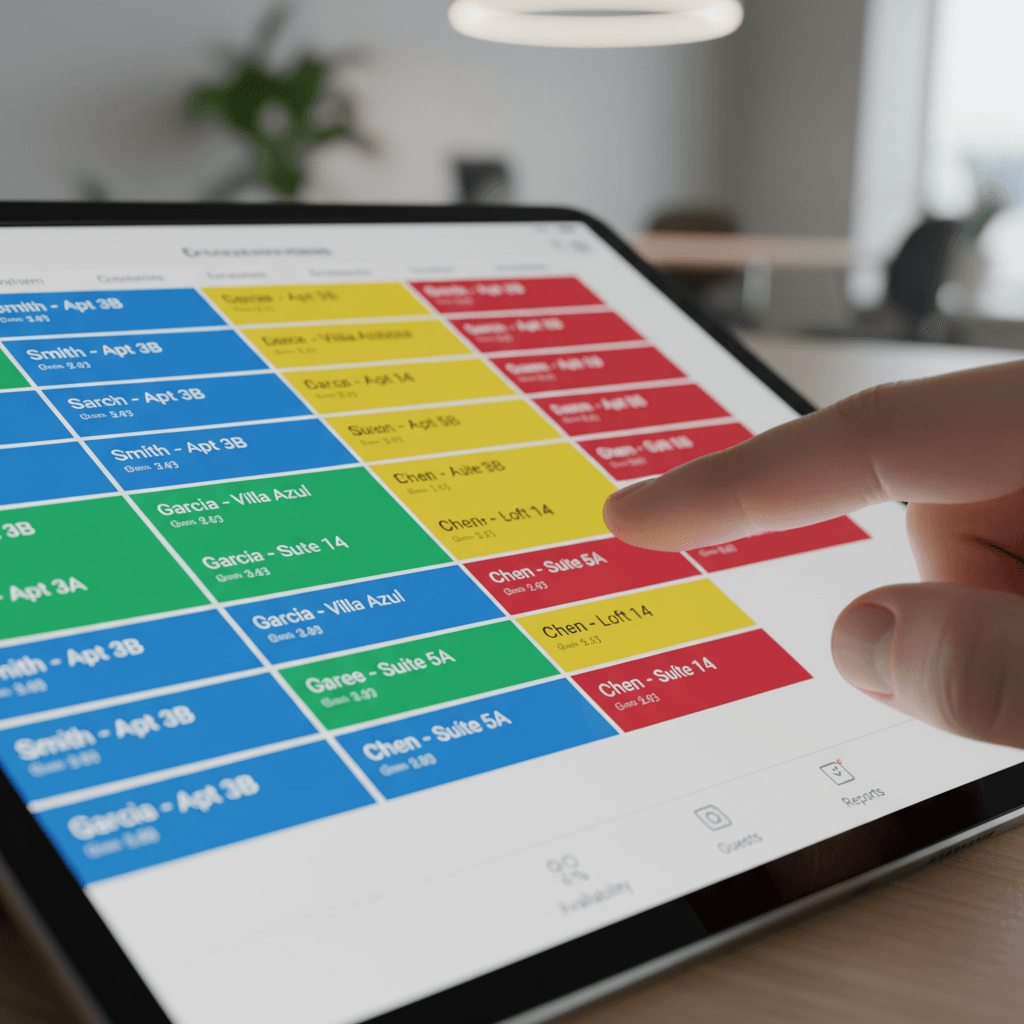
At its core, a Property Management System is a software platform that allows property owners, managers, and front-desk staff to manage all key aspects of their business from a single, centralized interface. It handles everything from reservations and billing to housekeeping and reporting, turning a tangled web of tasks into a streamlined, automated workflow.
But not all systems are created equal. They generally fall into two categories.
The Evolution from On-Premise to the Cloud
For decades, the only option was an on-premise PMS. This meant you had a physical server humming away in a back office or closet. You owned the hardware and the software license outright.
- Pros: You had direct control over your data.
- Cons: The upfront cost was massive (think tens of thousands of dollars), updates were manual and disruptive, and you could only access it from computers on the property. It was a digital ball and chain.
Then came the game-changer: the cloud-based PMS. These systems run on a SaaS (Software as a Service) model. You pay a monthly or annual subscription fee, and the provider handles all the hosting, security, and updates. You can access it from any device with an internet connection, anywhere in the world.
- Pros: Low upfront cost, automatic updates, top-tier security, and incredible flexibility.
- Cons: You need a stable internet connection (which is pretty much a given these days).
The shift towards the cloud was already happening, but the events of 2020 accelerated it dramatically. The need for remote access and operational flexibility made cloud-based systems the undeniable industry standard.
Who Needs a PMS? (From Boutique Hotels to Vacation Rentals)
You might think a sophisticated pms property management system is only for large, multi-national hotel chains. That couldn’t be further from the truth.
📖 Voir aussi : Beyond the Bottom Line: A Five-Sense Approach to…
The reality is, if you’re renting out property to guests, you need a PMS. The list of users is incredibly diverse:
- Independent and boutique hotels
- Large, branded hotel chains
- Quaint Bed & Breakfasts
- Hostels and guesthouses
- Vacation rental companies with scattered inventory
- Serviced apartments and multi-family complexes
Whether you’re running a 15-room ski lodge in Aspen or managing a portfolio of luxury villas in Phuket, a PMS is the foundational technology that enables professional, scalable operations.
The Core Features You Absolutely Can’t Live Without
A modern PMS can have a dizzying array of features, but a few core components are completely non-negotiable. These are the pillars that support your entire business.
Front Desk & Reservations: The Command Center
This is the heart of the system. It replaces the paper charts and clunky spreadsheets with a dynamic, visual interface often called a reservation grid or tape chart. With a few clicks, your front desk team can:
- See room availability and status at a glance.
- Create, modify, and cancel reservations in seconds.
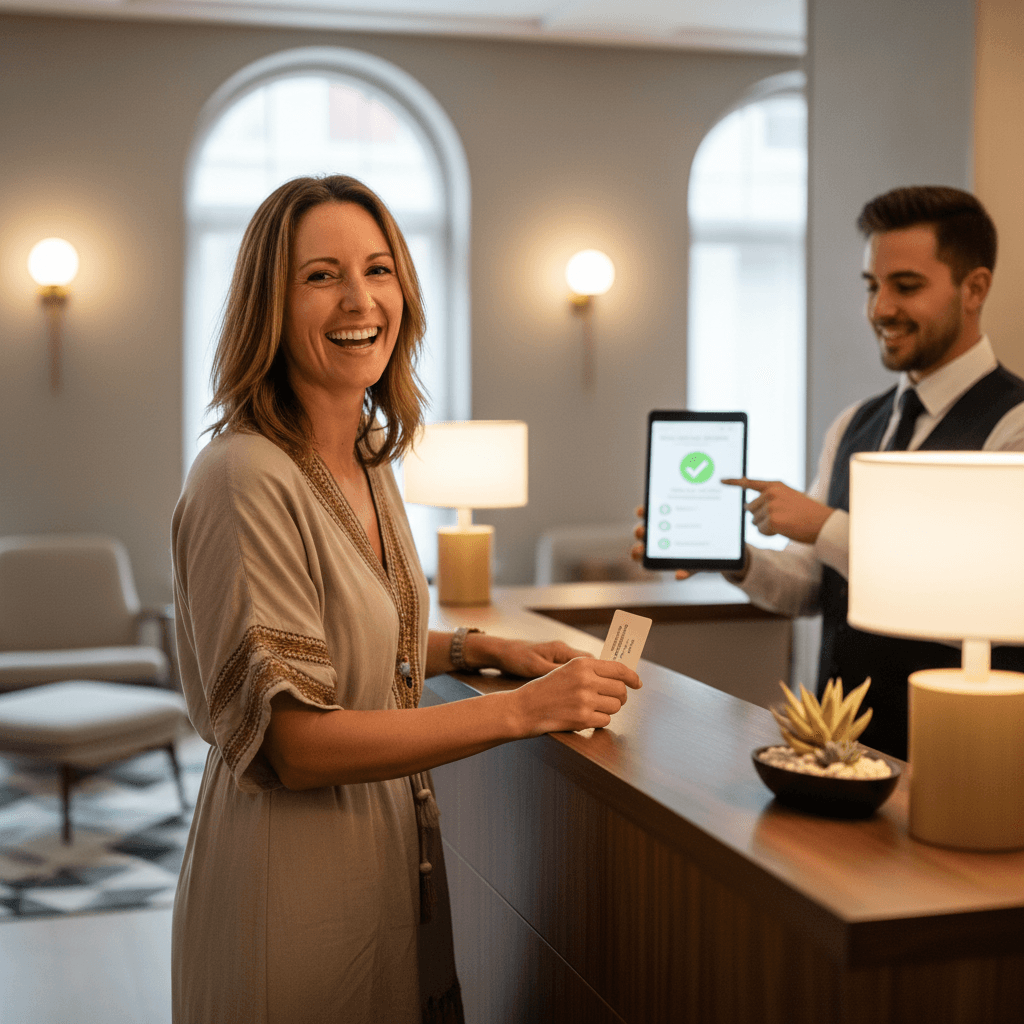
- Perform lightning-fast check-ins and check-outs.
- Assign rooms based on guest preferences or housekeeping status.
- Manage detailed guest profiles, storing contact info, stay history, and special requests.
The Direct Benefit: Speed and accuracy. You reduce check-in times from minutes to seconds, eliminate costly booking errors, and give your staff the information they need to provide personalized service.
📖 Lire aussi : Property Management Unlocked: Your A to Z Guide on…
Channel Management: Your Gateway to the World
This is an essencial integration, not just a feature. A channel manager connects your PMS to all your distribution channels, including Online Travel Agencies (OTAs) like Booking.com, Expedia, and Airbnb, as well as your own website’s direct booking engine.
Here’s how it works: When a guest books a room on Expedia, the channel manager instantly updates your inventory everywhere else. It tells Booking.com, your own website, and your PMS that the room is no longer available for those dates. It works in reverse, too. If you block a room for maintenance in your PMS, it becomes unavailable across all channels.
The Direct Benefit: Zero overbookings. It’s that simple. By syncing your rates and availability in real-time across every single platform, you eliminate the single most stressful and damaging error in hospitality.
Housekeeping & Maintenance: The Unsung Heroes
A great guest experiance depends on a clean, well-maintained room. The PMS acts as the communication bridge between the front desk and your operations team.
- Housekeeping staff can update a room’s status (e.g., from ‘Dirty’ to ‘Clean’ or ‘Inspected’) from a tablet or smartphone.
- The front desk sees this update instantly, so they know exactly which rooms are ready for arriving guests.
- Staff can report maintenance issues (like a leaky faucet or broken TV) directly in the system, creating a work order that can be tracked to completion.
The Direct Benefit: Operational efficiency and guest satisfaction. No more frantic radio calls to check on room status. No more checking a guest into a room that hasn’t been cleaned. It’s a seamless, silent workflow that just works.
📖 Dans le même thème : The Success Property Management Playbook: 7 Pillars of…
Billing & Reporting: The Brains of the Operation
This is where your PMS turns from an operational tool into a strategic asset. The billing module automates the entire financial side of a guest’s stay, from creating folios and posting charges (for the room, minibar, or restaurant) to processing payments securely.
But the real power lies in the reporting engine. With a click, you can generate critical reports that tell you the health of your business:
- Occupancy Rate: What percentage of your rooms are full?
- Average Daily Rate (ADR): What’s the average rental income per paid occupied room?
- Revenue Per Available Room (RevPAR): The most important metric, combining occupancy and ADR to show your true revenue performance.
The Direct Benefit: Data-driven decisions. Instead of guessing, you know exactly what’s working. You can analyze booking trends, identify your most profitable channels, and make strategic pricing adjustments to maximize revenue.
The Real-World Impact: How a PMS Actually Transforms Your Business
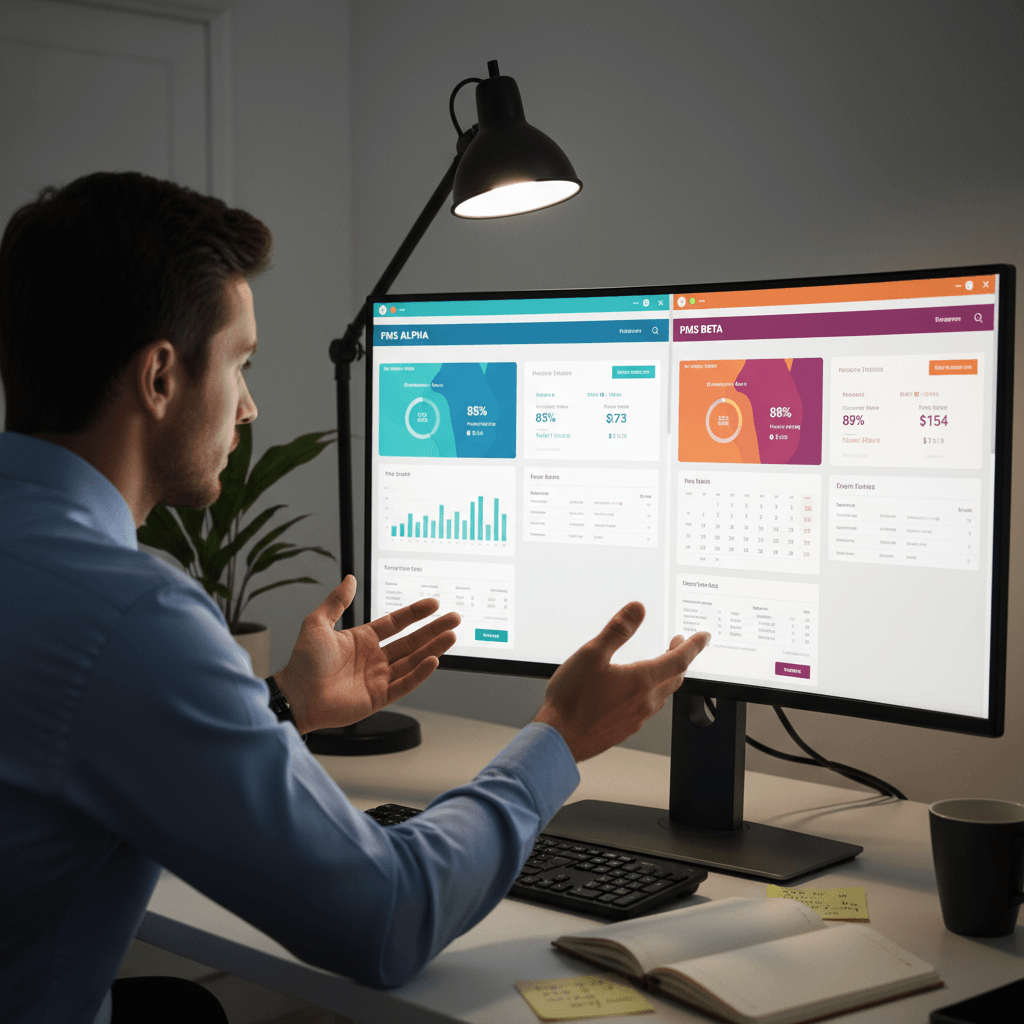
Okay, features are great. But what does a powerful pms property management system actually *do* for your bottom line and your sanity? Let’s talk about tangible results.
Obliterate Inefficiency and Human Error
This is a bold claim, but it’s true. Manual processes are slow and prone to mistakes. Think about the check-in process. Manually finding a reservation, confirming details, swiping a credit card, and handing over a key can easily take 10-15 minutes per guest. With an integrated PMS, the entire flow can be done in under two minutes.
📖 Vous aimerez aussi : From Paradise to Profit: A Foreign Owner’s Guide to…
Now, multiply that time saved by every check-in, every checkout, every rate update, and every report you run. The hours you reclaim are staggering. That’s time your staff can reallocate from administrative drudgery to what actually matters: engaging with and delighting your guests.
Unlock New Revenue Streams
A good PMS isn’t just about managing what you have; it’s about growing your revenue. It does this in a few key ways:
- Dynamic Pricing: The best systems can integrate with revenue management tools that automatically adjust your rates based on demand, local events, and competitor pricing, ensuring you’re never leaving money on the table.
- Upselling & Add-ons: The system can prompt your staff (or even the guest during online booking) with opportunities to upsell. “Would you like to upgrade to a sea-view room for just $50 more?” or “Add a late check-out for $25?” These small offers add up to significant ancillary revenue.
- Direct Bookings: By integrating with a powerful, commission-free booking engine on your own website, the PMS helps you capture more direct reservations, saving you the 15-25% commission you’d otherwise pay to OTAs.
Craft an Unforgettable Guest Experience
In the end, hospitality is about how you make people feel. A PMS is your secret weapon for creating consistently positive experiences that lead to glowing 5-star reviews.
How? It remembers everything. When a repeat guest books, their profile pops up. You can see they prefer a room on a high floor, asked for extra pillows last time, and are allergic to feathers. Imagine their delight when they check in and you say, “Welcome back, Mr. Smith! We have your favorite high-floor room ready for you, with foam pillows, just as you like.”
That level of personalization is what turns a one-time guest into a lifelong advocate for your brand. A seamless check-in, an accurate bill, and a staff that seems to anticipate your needs, this is absolutly key to success.
📖 Article connexe : The Ultimate Guide to Property Management in Phuket:…
How to Choose the Right PMS: A No-Nonsense Checklist
Convinced you need one? Great. Now comes the hard part: choosing from the hundreds of options on the market. Don’t get overwhelmed. Follow this simple, four-step process.
Step 1: Audit Your Own Needs First
Before you look at a single demo, look in the mirror. You need to understand your own operation inside and out. Ask yourself:
- Property Type & Size: Are you a 10-room B&B or a 200-room hotel with a conference center? The scale of your operation dictates the complexity you need.
- Biggest Pain Point: What is the single most broken process in your business right now? Is it overbookings? Slow check-ins? Inaccurate reports? Find a PMS that excels at solving your specific problem.
- Budget: What can you realistically afford per month? Remember to think in terms of value and ROI, not just cost. A system that costs $50 more per month but saves you 10 hours of labor is a bargain.
Step 2: Vet the Integrations Like a Detective
A PMS that doesn’t connect to your other critical systems is a glorified spreadsheet. It creates more work, not less. Before you commit, create a list of your existing technology and ensure the PMS can integrate seamlessly. This includes:
- Point of Sale (POS): For your restaurant, bar, or gift shop.
- Accounting Software: Like Xero, QuickBooks, or Sage.
- Payment Gateways: Such as Stripe or Adyen.
- Keycard Systems: For automated key creation.
- Marketing & CRM Tools: For email campaigns and guest communication.
Step 3: Demand a Demo (and Ask the Hard Questions)
Never buy a PMS without seeing a live, personalized demo. This is your chance to see the software in action and grill the salesperson. Don’t let them stick to their script. Ask them to show you specific, real-world scenarios:
- “Show me exactly how you handle a group booking of 10 rooms with different arrival dates.”
- “What does the night audit process look like, step by step?”
- “Walk me through changing a rate for a specific holiday weekend across all my channels.”
- “How easy is it to split a bill between two guests in the same room?”
Step 4: Don’t Skimp on Support
Your PMS will become the most critical piece of technology in your business. When something goes wrong at 10 PM on a holiday, you need help immediately. Evaluate the provider’s customer support with extreme prejudice.
Is support available 24/7/365? Is it phone-based, or are you stuck with slow email tickets? What is their average response time? A good PMS helps a property manager in Phuket handle massive seasonal demand spikes, but only if the support team is there to back them up when things get hectic.
Your Business, Supercharged
Let’s be clear: a modern PMS isn’t an expense. It’s a high-yield investment in efficiency, profitability, and guest satisfaction.
It truly is the central nervous system of your property. It connects your front desk to your housekeeping, your booking channels to your bank account, and your data to your decisions. It ensures every department is communicating and working together in perfect harmony.
The hospitality industry is more competitive than ever. Guest expectations are higher, and the pace of change is relentless. Leveraging the right technology is no longer a luxury or an option for the big players. It’s the fundamental key to not just surviving, but thriving in the modern travel landscape.
So, take a hard look at your current system, or your lack thereof. Start evaluating your needs against the checklist above. The chaos of spreadsheets and the fear of double-bookings don’t have to be your reality. A smarter, smoother, and more profitable way of running your business is waiting.
FAQ
What exactly is a Property Management System (PMS)?
A Property Management System, or PMS, is a software solution that acts as a central command center for hospitality businesses like hotels, motels, and vacation rentals. It helps manage all day-to-day operational tasks, including guest reservations, check-in/check-out processes, room assignments, billing, and housekeeping status. Think of it as the digital front desk and back office rolled into one powerful tool.
What are the main benefits of using a PMS?
The primary benefits are increased efficiency and an improved guest experience. By automating administrative tasks, a PMS frees up staff to focus on guest needs, reduces the chance of human error like double bookings, and provides valuable data insights through reporting. This ultimately helps streamline operations and can lead to better revenue management.
What is the difference between a cloud-based and an on-premise PMS?
An on-premise PMS is installed on a local server at the property, requiring you to manage the hardware and IT maintenance. A cloud-based PMS is hosted online by the provider and accessed through a web browser, offering the flexibility to manage your property from anywhere, automatic software updates, and typically lower upfront costs.
How does a PMS work with other hotel technology like a channel manager?
A modern PMS is designed to integrate seamlessly with other essential hotel systems. It connects to a channel manager to automatically sync room availability and rates across all your online booking channels (like Booking.com, Expedia, etc.), preventing overbookings. It can also connect to booking engines for direct website reservations and point-of-sale (POS) systems for restaurant or spa charges.